
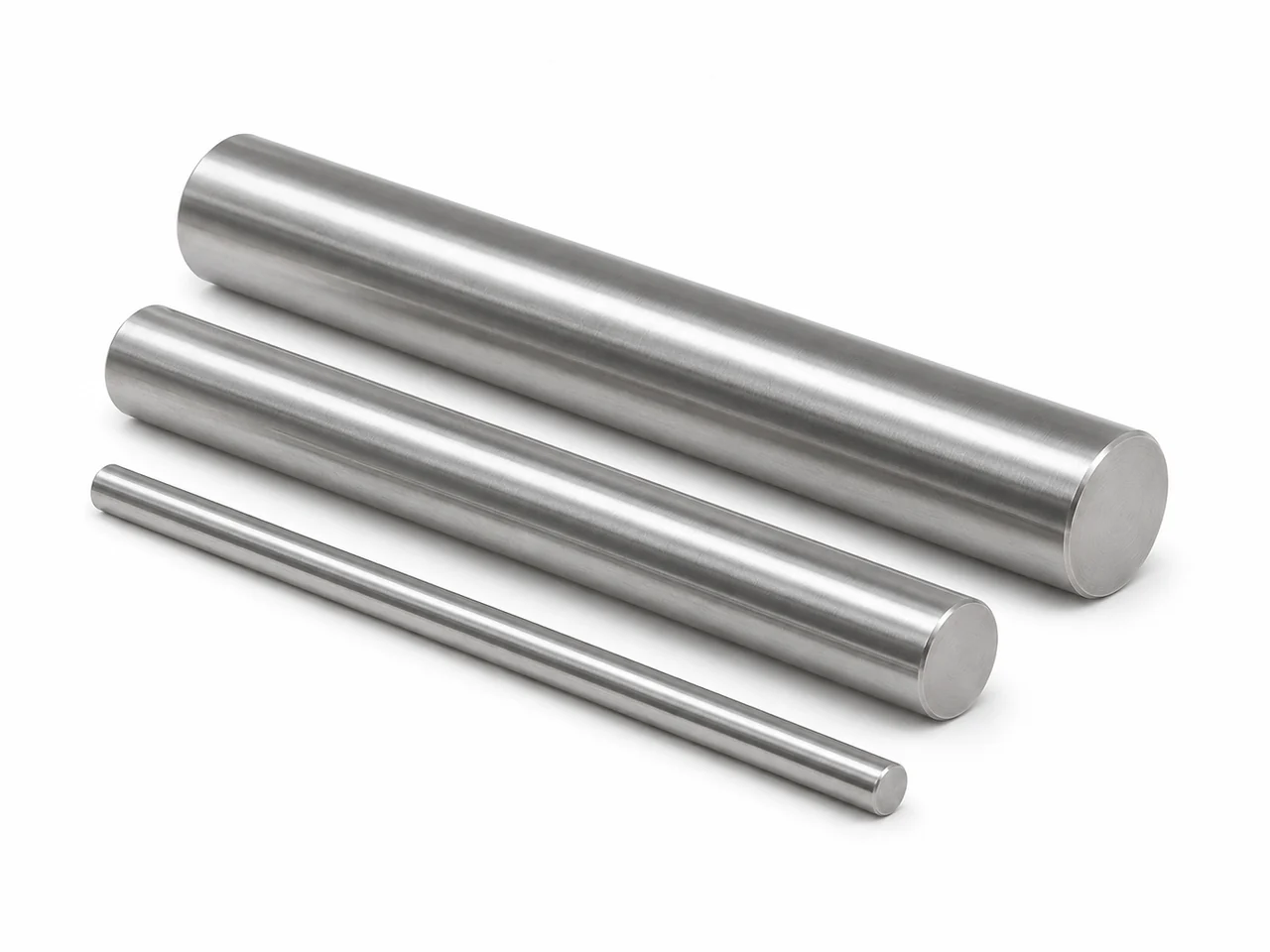
Choosing between 303, 304 and 316L precision ground bar involves two decisions: selecting a suitable material and specifying the finished bar accurately. Grinding controls a surface and dimensions; it does not turn one stainless grade into another.
Start with the environment and fabrication route
303 is a free-machining stainless grade. 304 is widely used as a general-purpose austenitic stainless steel, while molybdenum-bearing 316L is often considered where additional corrosion resistance is needed. These distinctions are a starting point, not a guarantee for a particular fluid, cleaning chemical or installation.
Describe exposure, concentration, temperature and cleaning conditions to the responsible material selector. “Stainless” by itself does not establish suitability for seawater, aggressive chemicals or a regulated process. If welding is planned, have the grade and fabrication procedure reviewed rather than substituting a free-machining grade solely to reduce machining time.
Separate the grade from the grinding specification
| Selection field | Question to settle |
|---|---|
| Material | Which exact grade and applicable material standard does the drawing require? |
| Condition | What delivery condition and mechanical-property evidence are required? |
| Diameter | What nominal diameter and tolerance apply to the supplied bar? |
| Geometry | What straightness, roundness or runout limits are functional? |
| Surface | What roughness and surface-defect acceptance criteria apply? |
Why an apparently equivalent quote may be different
A quote may cover raw bar, ground stock or a finished shaft with threads and shoulders. Clarify whether the supplied diameter is the final working surface or includes machining allowance. Also distinguish the purchased length from the finished component length, allowing for the intended cutting and workholding operations.
For example, a buyer replacing a fitted shaft should send the fit and geometry requirements from the drawing. Ordering a visually similar ground bar without these requirements can leave the final machining route unresolved, even when the material grade is correct.
Check documentation rather than color or magnetism
Appearance is not a reliable grade identification method. Request the agreed material documentation and maintain batch identification during cutting and machining. Where positive material identification or additional testing is required, specify the method, scope and acceptance criteria in the order.
Compare the relevant Newneng listings
Review 303 precision ground bar, 304 precision ground bar and 316L precision ground bar against one set of requirements. Confirm current availability, dimensions and supply condition for the particular enquiry.
Send Newneng your bar or shaft drawing with the selected grade, quantity, working environment, machining plan and required documents. We can review the catalog options and confirm the quotation scope.